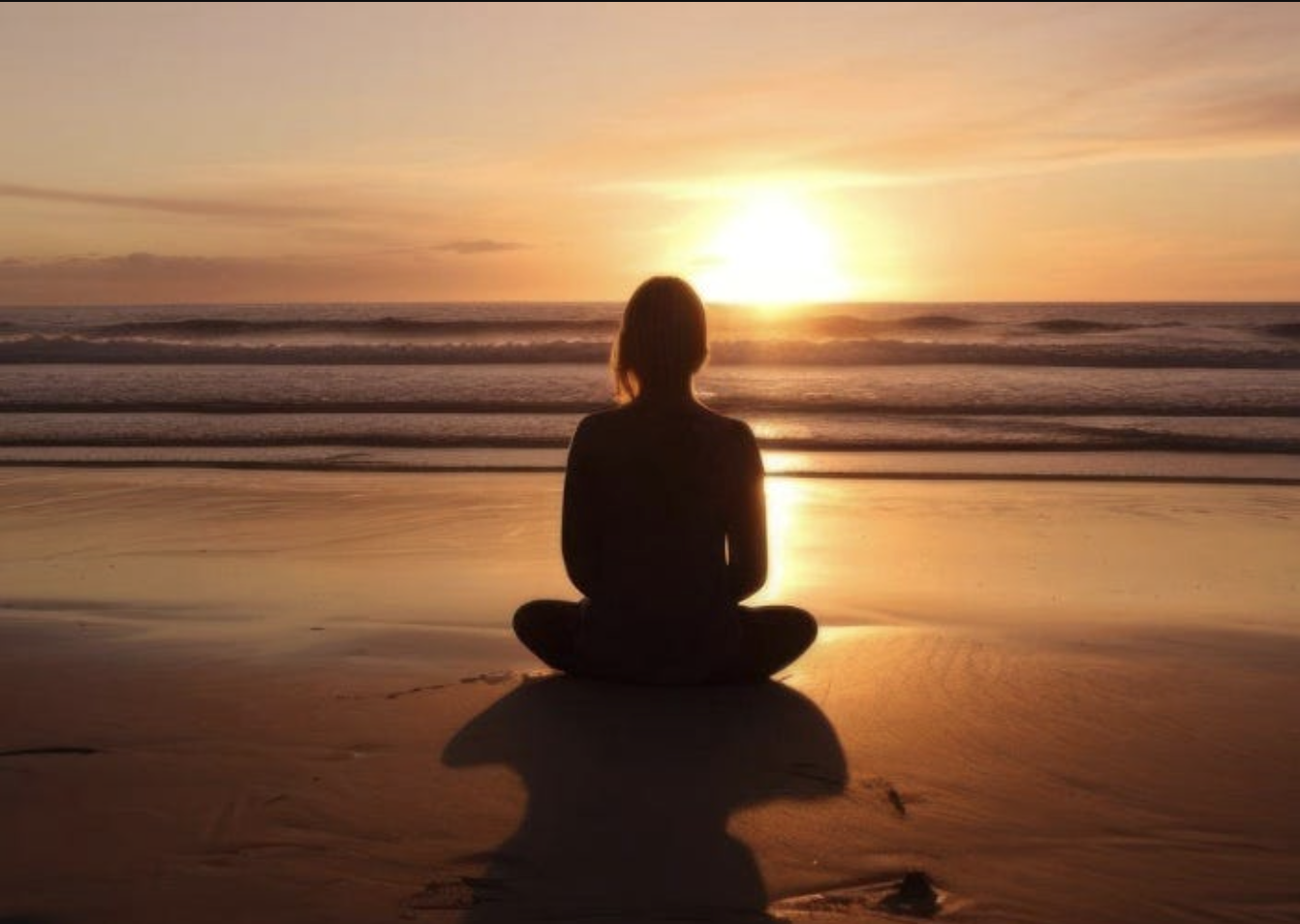
 After a few decades of daily meditation, in 2024 I became certified as a mindfulness and meditation instructor at my Buddhist home, the Zen Life and Meditation Center of Chicago. Since then I've received plenty of questions about meditation from people who've been paralyzed by the many varieties of meditative practice that appear in a web search. They want to know if I can boil it down to a few sentences.
At my Zen center we offer short, interesting foundational courses in meditation and the wider fields of mindfulness and Zen, accessible in person or online, taught by me and several other teachers trained and certified by the Zen center. But if you want to start right this minute, here are your few sentences.
Many forms of meditation practiced by Buddhists or in the ostensibly non-spiritual context of mindfulness have the following aspects in common.
- Sit with a straight but not stiff back.
- Feel your breath.
- When your thoughts intrude, return your attention to the sensation of your breath.
- Repeat for 20 minutes, or as long as you can.
It’s not more special or exotic than that. The method itself is quite simple. But not necessarily easy, which is where most of the instruction comes in.
Generally, at the outset, a person’s mind is not wild about meditation. It is wild about craving and fantasizing and scheming to get cool stuff like love and sex and success and recognition and material comfort. It’s also wild about having fear and anger and jealousy and boredom about the not-cool stuff it’s getting but doesn’t want, which includes sitting around doing nothing but feeling the breathing of the body to which it has been involuntarily assigned.
Centuries of meditators have devised tricks and workarounds to get the mind to tolerate, accept and even cherish the act of meditation. A common strategy, popular for those whose minds are racing so fast and far across the mindverse they forget they’re meditating, is to count the breaths. Often recommended is to count the out-breath. On or after the first exhale count silently “one.” Then at the next exhale “two,” and so forth, up to ten, then start over at one.
Many people, and perhaps most beginners, will lose count before ten. Then we chuckle softly at our mind and begin again with “one.” Even experienced meditators will go back to counting breaths at times when the mind is unsettled, and lose count before ten.
Wait, you may be thinking. Isn't meditation supposed to be similar to prayer? This seems like the prayer of a robot.
Give it time. We’re trying to pay attention to the experience of life in the present moment. We start with the breath because it’s handy for everyone, goes on constantly without effort, and forms a mutually beneficial connection between our body and the rest of the world.
With practice we might go beyond breath to include a fuller experience of the present, which for some meditators might start to approach a connection with God, the absolute, energy, universal consciousness, or our personal divine whatchamacallit.
Not that we’ll stop thinking, because brains and minds are there to think. Without thought our experience couldn’t be put into action. We’d be ornaments, not beings.
But we might not let thought be the center of attention. We might merely observe a thought as part of our experience, rather than following it somewhere besides here and now. We might use attention to the whole body-and-mind experience of the present moment to replace the judging, craving, aversive, self-centered thinking that tends to yank us away from the events happening in front of us.
Suddenly we’d be present for our own lives. We might even get the hang of that outside meditation. It could be a way to live our lives better for us and the other lives we touch.
Plenty more on mindfulness and the practice of meditation on this blog as it proceeds. Good luck to those who are trying for the first time. Everyone’s experience is different. Some take right to it. Others find it more challenging. Beginning minds can run out of meditative gas after five or ten minutes. Emotions that have been bottled up can get uncorked and fizz to the surface.
But I’m confident anyone who does this practice and keeps at it will be better off. Otherwise millions of people wouldn't have kept this practice alive for thousands of years.
Comments